





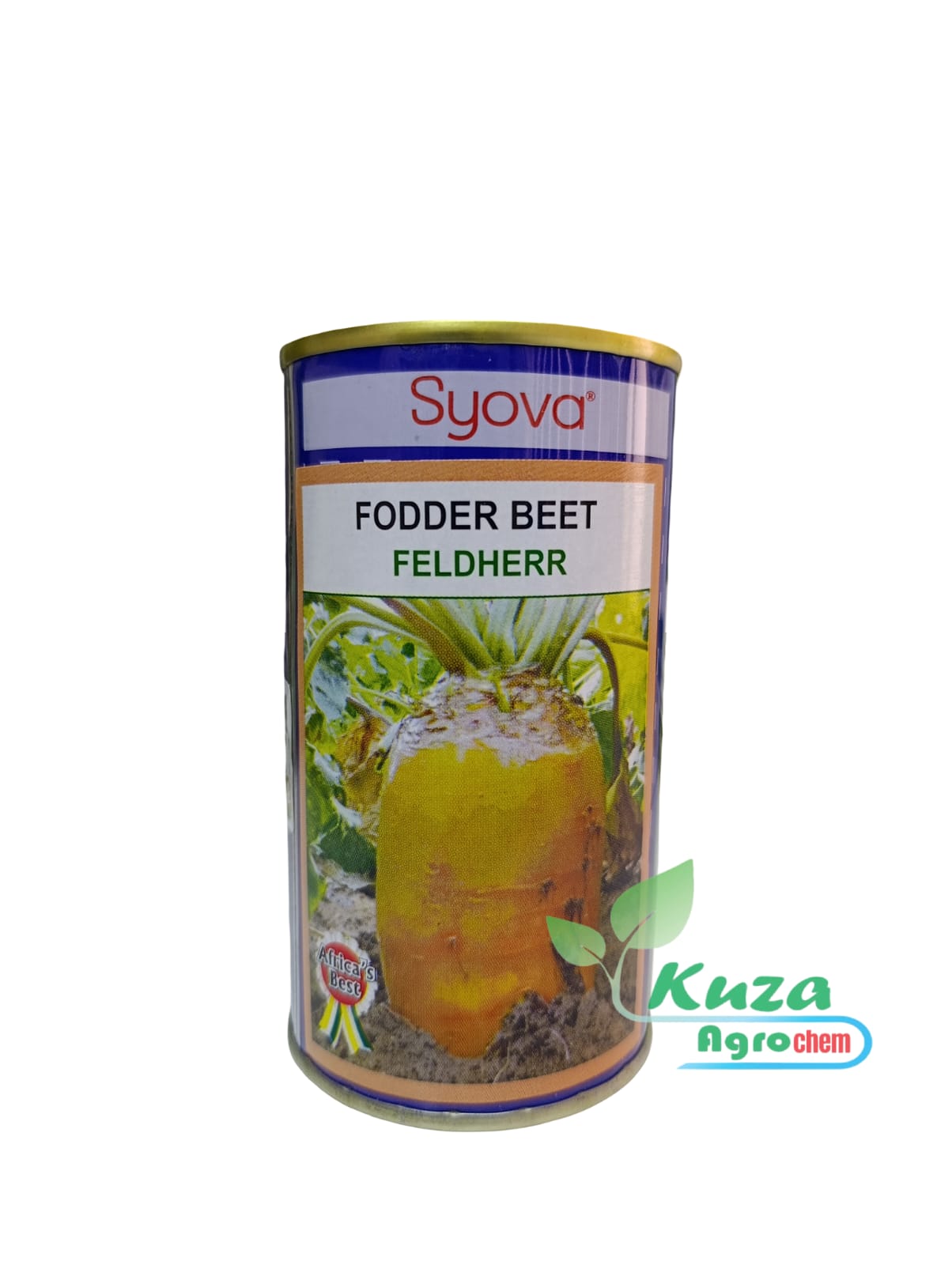
Vendor: Kuza Agrochem (Authorized Seller)
Product Type: Fodder crop seeds
Packaging Sizes: 1kg, 500g, 250g, 100g, 50g, 25g, 10g
Germination Rate: 85–95% under proper conditions
Maturity Period: 120–150 days
Storage Life: 1 year from packaging
Recommended Climate: Cool to moderate with adequate rainfall
Usage: Suitable for livestock feed production across Kenya
Fodder Beet is a high-yielding, energy-rich root crop widely grown as animal feed for dairy cattle, beef, goats, and sheep. It produces large, nutritious roots with excellent palatability and digestibility, making it an ideal supplement for boosting milk production and overall animal performance.
This crop thrives in well-drained soils and temperate climates, offering consistent yields even under variable growing conditions. Its high carbohydrate content makes it a superior energy source, while its lush green tops provide additional quality forage for livestock.
Fodder Beet is a dependable feed solution for farmers seeking to improve feed efficiency, reduce feeding costs, and enhance livestock health naturally.
Key Features & Benefits
High Energy Feed: Rich in carbohydrates and sugars that increase milk yield and body condition.
Excellent Palatability: Animals readily consume both the roots and leafy tops.
High Yield Potential: Produces abundant roots suitable for silage or direct feeding.
Improves Digestibility: Provides a balanced feed that supports rumen function and reduces feed waste.
Soil-Enriching Crop: Contributes to soil fertility when used in crop rotation systems.
Cost-Effective: Reduces reliance on expensive commercial feeds.
Planting & Cultivation Guide
Land Preparation:
Plough and harrow soil to a fine tilth.
Ensure good drainage and moderate moisture.
Sowing:
Sow seeds 2–3 cm deep in rows spaced 45–60 cm apart.
Maintain a plant spacing of 15–25 cm within the row.
Fertilization:
Apply well-decomposed manure before planting.
Top-dress with NPK fertilizer for optimal root and leaf growth.
Watering:
Maintain consistent moisture levels, especially during early growth stages.
Weeding:
Weed regularly to prevent competition for nutrients and water.
Harvesting:
Ready for harvest in 4–5 months after planting when roots reach full size.
Feeding Recommendations
Feed roots fresh or chop and mix with forage.
Can be ensiled for long-term storage.
Introduce gradually to avoid digestive upset.
Suitable for dairy cows, beef cattle, goats, sheep, and pigs.
Storage & Handling
Store harvested roots in a cool, shaded area with good airflow.
Avoid exposure to direct sunlight to reduce spoilage.
Keep seeds in a dry, airtight container before planting.
Why Buy from Kuza Agrochem
High-quality, tested fodder beet seeds.
Affordable and suitable for all Kenyan farming regions.
Reliable vendor with countrywide supply.
Agronomic guidance and after-sale support available.
Composition
Energy Source: High carbohydrate and sugar content.
Nutrients: Rich in calcium, potassium, and trace minerals.
Moisture Content: 75–80% (in fresh roots).
Best For
Dairy and beef farmers aiming to increase milk yield and weight gain.
Mixed livestock systems needing energy-rich feed.
Areas with moderate rainfall and well-drained soils.
Rate of Use
| Animal Type | Daily Feeding Amount | Usage Notes |
|---|---|---|
| Dairy Cows | 10–15 kg of roots | Mix with dry forage |
| Beef Cattle | 8–12 kg of roots | Introduce gradually |
| Goats/Sheep | 2–4 kg of roots | Chop finely before feeding |
| Pigs | 1–3 kg of roots | Feed cooked or raw, mixed with other feed |
Benefits
Enhances milk production and animal weight gain.
Improves feed efficiency and digestibility.
Provides consistent nutrition throughout dry seasons.
Lowers feed costs with home-grown energy feed.
Boosts overall herd performance and health.

East Africa
 Our Address: Nairobi CBD along Haile Selassie avenue opposite Margaret Wanjiru Church.
 Contact Us:(+254) 759-896-408
Rating
92%
Ship on time
100%
Chat response






Customer questions & answers